Dmitry Lipskerov.
Writer. Playwright.
Creator of Worlds.

LipskerovNFT™ — A Unique Project for the Tokenization of Rights to a Literary Legacy
LipskerovNFT™

8
An experiment in creating a new approach to acquiring and using rights to literary works:
Engagement:
Fans of the author’s work gain the opportunity to connect with his legacy by acquiring fragments of their favorite works, “packaged” as NFTs.
Investment:
The value of rights to fragments acquired by fans increases as interest grows in the commercial use of the author’s creative legacy.
Commercial Use:
It is possible to acquire all fragments of a work in order to obtain an unlimited license for subsequent exploitation — for publishing, film adaptations, or dramatizations.
Author

Dmitry Lipskerov is a contemporary European writer and playwright, known for his unique blend of reality and fiction, profound psychological insight, and distinctive style.
He is the author of such novels as The Last Dream of Reason, Forty Years of Changzhou, Relatives, as well as novellas such as Waiting for Salomea, Fingers for Caroline, and a number of successful plays performed at the Lenkom Theatre.
A successful businessman, renowned for his interest in new technologies, which led him to develop and bring to life the innovative LipskerovNFT™ project.
Literary NFTs
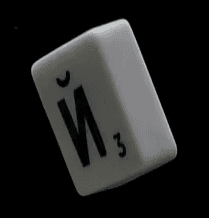
The LipskerovNFT™ project extended these unique NFT properties into the fields of literature, publishing, and licensing.
NFTs — unique, non-fungible tokens issued on popular modern blockchains — are closely tied to the world of art and often provide the opportunity for both symbolic ownership and tangible rights (as in the case of NFTs that secure the transfer of rights to an artwork).
Dmitry Lipskerov’s creative legacy has been divided into unique text fragments, each of which has been issued as an NFT on the Base blockchain. Each token also contains the legal mechanism for acquiring rights to fragments or to entire literary works by its holders.
Project Description
1. What is LipskerovNFT™?
LipskerovNFT™ is an experimental project for the tokenization of literary works. The complete body of Dmitry Lipskerov’s writings was divided into unique text fragments. Each fragment was issued as a non-fungible token (NFT) on the Base blockchain, forming the digital corpus of the original work.
2. Licensing Model
The project is governed by a public license offer under the law of England and Wales. By acquiring and confirming control over all tokens that constitute a specific work, the buyer (the “Licensee”) automatically receives an exclusive worldwide license to that work, including the following rights:
Reproduction (print, digital, audio)
Distribution for commercial and non-commercial purposes
Translation and adaptation
Public performance
Creation of derivative works
Granting of sublicenses
3. How does licensing work?
To accept the license and activate rights:
Acquire 100% of the tokens of the relevant work into a single blockchain wallet.
Request a control token from the author.
Return the control token within 3 hours to confirm wallet ownership. This verification activates the exclusive license, which may then be recorded on the blockchain.
4. Optional full transfer of rights
The Licensee may choose to:
Hold the tokens and use the license indefinitely; or
Burn all tokens. Afterward, the author signs a Deed of Assignment, permanently transferring all exclusive rights to the Licensee.
5. Legal Basis
Jurisdiction: England and Wales
Legal form: Public offer, digital contract principles
Guarantee of immutability: SHA-256 hashes (calculated on text, not files) and storage of documents in IPFS (decentralized storage)
Exclusivity: The author will not issue other licenses for the same work
Works





Documents

All project documents are stored in decentralized IPFS storage, ensuring that no third parties can alter or substitute them.
Each token contains a digital fingerprint (a SHA-256 hash of each document based on its text), allowing users to verify independently that the document they downloaded to review project terms is indeed the authentic project document.
Basic project information together with links to core documents can be found at: